
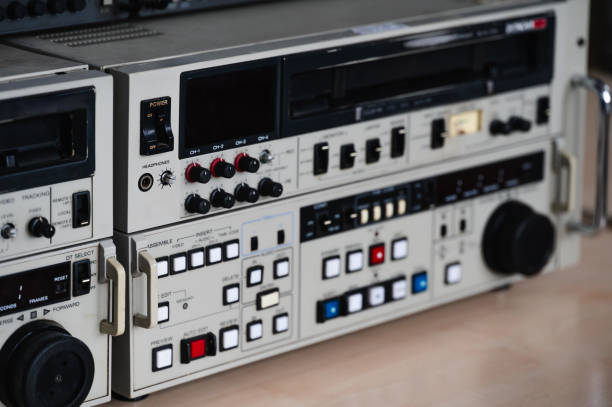
In the rapidly shifting landscape of music technology, the Tascam VX Pad Stack 2000 has emerged as a definitive solution for producers who demand both tactile feedback and digital depth. As home studios evolve into high-output creative hubs, the hardware at the center of the desk must do more than just pass audio signals. Tascam, a brand with a legacy rooted in the golden age of recording, has engineered this unit to serve as a bridge between classic analog warmth and the infinite possibilities of the modern DAW. By integrating high-fidelity preamps with a revolutionary pad-based interface, the “Stack” series sets a new benchmark for how we interact with sound.
The Architectural Vision of the Tascam VX Pad Stack 2000
At its core, the Tascam VX Pad Stack 2000 is designed to eliminate the friction between a musical idea and its technical execution. Many controllers force a producer to look at a computer screen to confirm settings, but this unit prioritizes “eyes-off” operation. The physical layout is divided into intuitive zones: the command section for transport, the performance zone for the 16 RGB pads, and the mixing tier for real-time level adjustments.
Tactile Precision and Response
The pads on the are not merely triggers; they are high-resolution sensors. Utilizing advanced pressure-sensing technology, they allow for nuanced performances that capture the “ghost notes” in a drum pattern or the subtle swell in a synth pad. This sensitivity is crucial for genres like jazz-fusion, hip-hop, and IDM, where the human element is what separates a sterile track from a living, breathing composition.
Industrial Build Quality
Tascam has avoided the “toy-like” feel of entry-level controllers. The features a reinforced steel chassis and high-torque potentiometers. This durability ensures that whether the unit is sitting in a climate-controlled studio or being hauled across the country for a live tour, the internal components remain protected and the performance remains consistent.
Technical Prowess: Under the Hood of the Tascam VX Pad Stack 2000
To appreciate the , one must look at its internal audio path. Unlike standard MIDI controllers that lack audio conversion, this is a hybrid interface. It utilizes Ultra-HDDA (High Definition Discrete Architecture) preamps, which are famous for providing a clean, transparent signal with an incredibly low noise floor of -125dBu.
High-Resolution Audio Processing
The Tascam VX Pad Stack 2000 supports sample rates up to 192kHz. While many claim such high rates are unnecessary, the headroom provided during the mixing and “stacking” process prevents digital aliasing and ensures that high-frequency transients remain crisp.
Connectivity Breakdown
The rear panel of the Tascam VX Pad Stack 2000 acts as a Swiss Army knife for connectivity:
XLR/TRS Combo Inputs: Each with independent 48V phantom power.
Optical I/O: Allows for expansion via ADAT, meaning the unit can grow as your studio grows.
Word Clock: Ensures perfect synchronization when used alongside other high-end digital outboard gear.
Masterful Integration: The “Stack” Logic
The most innovative feature of the Tascam VX Pad Stack 2000 is undoubtedly its namesake: the Pad Stack logic. In traditional production, layering sounds requires multiple tracks and complex routing. With this unit, “Stacking” is a hardware-level function.
Layering Without Latency
Users can “stack” up to four independent sounds on a single pad. For example, a producer can layer a deep 808 sub, a transient-heavy kick, a vinyl crackle sample, and a room-reverb tail all on Pad 1. The Tascam VX Pad Stack 2000 processes these layers internally, triggering them simultaneously with zero latency, which is a significant advantage over software-based layering that can often tax the computer’s CPU.
Multi-Channel Control Surface
Beyond the pads, the Tascam VX Pad Stack 2000 functions as a Mackie Control/HUI compatible surface. This means the faders automatically map to your DAW’s mixer. Moving a physical fader on the Tascam moves the software fader in Logic, Ableton, or Pro Tools, allowing for “tactile mixing” that is more intuitive than using a mouse.
Optimized Performance with the Tascam VX Pad Stack 2000
Maximizing the potential of the Tascam VX Pad Stack 2000 requires understanding its software ecosystem. The bundled “Tascam SoundLab” software provides a visual matrix for the stacking engine, allowing users to drag and drop samples directly onto the pads.
Advanced Macro Mapping
The Tascam VX Pad Stack 2000 allows for sophisticated macro assignments. You can program the unit so that the velocity of your pad strike doesn’t just change the volume, but also changes the filter cutoff or the decay time of the sample. This creates a dynamic instrument that feels as expressive as an acoustic drum kit or a grand piano.
Maintaining Your Tascam VX Pad Stack 2000
A professional tool like the Tascam VX Pad Stack 2000 deserves proper care to maintain its longevity.
Dust Prevention: Use a dedicated deck saver or a simple cloth cover when the unit is not in use. Dust is the enemy of velocity-sensitive pads.
Firmware Updates: Tascam frequently releases updates that improve the “Stack” algorithm and add compatibility for new OS versions.
Cable Management: Ensure the USB-C and power cables are not under tension, as this can wear out the ports over several years of use.
Conclusion
The Tascam VX Pad Stack 2000 is more than just a piece of hardware; it is a statement of intent for the modern creator. By merging the roles of a high-end audio interface, a responsive MIDI controller, and a sophisticated performance instrument, Tascam has simplified the complex world of multi-layered sound design. It offers a bridge to a more intuitive way of making music—one where the technology disappears, and only the sound remains. Whether you are building an orchestral score or a gritty underground beat, the VX Pad Stack 2000 provides the precision, power, and “stackable” versatility to bring your vision to life.
FAQs (Frequently Asked Questions)
1. How does the Tascam VX Pad Stack 2000 handle large sample libraries?
The unit utilizes a high-speed USB-C 3.1 connection, allowing it to trigger samples from your computer’s SSD with near-instantaneous speeds. The internal “Stack” memory helps cache the most frequently used transients to further reduce jitter.
2. Can I use the Tascam VX Pad Stack 2000 for podcasting and streaming?
Absolutely. Thanks to its clean Ultra-HDDA preamps and the “Loopback” function, it is an excellent choice for streamers who need to mix microphone input with computer audio in real-time.
3. Is the “Stack” feature destructive to the original audio?
No, the stacking process is entirely non-destructive. You can adjust the levels, pitch, and effects of each individual layer within a stack at any time without altering the original sample files.
4. What DAWs are most compatible with the Tascam VX Pad Stack 2000?
While it works with all major DAWs, it features “deep integration” templates for Ableton Live and Bitwig Studio, allowing for specialized clip-launching capabilities right out of the box.
5. Does the Tascam VX Pad Stack 2000 require a separate power brick?
For standard MIDI and two-channel recording, it can be powered via the USB bus. However, for full 16-pad RGB brightness and 4-channel phantom power, using the included 12V AC adapter is recommended for maximum stability.