
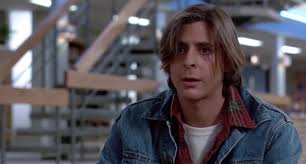
“Clyde Allen Green 80s actor movies” is a phrase that has recently surfaced across social media platforms, sparking curiosity, nostalgia, and heated debates online. According to the person behind the name, he was a teen actor in early‑1980s sitcoms — a “childhood actor” whose identity faded from public memory. But despite the intrigue, a thorough investigation reveals that there is no credible evidence to support the claim that Clyde Allen Green ever starred in any documented 1980s films or TV shows. In this article, we’ll explore the origins of the mystery, examine the clues and controversies, and consider what it all means in the age of viral‑nostalgia.
Origins of the Clyde Allen Green Mystery
The story begins on social media — particularly TikTok, where a user with handle @clydeallengreen posted cryptic videos challenging viewers to guess which 1980s sitcom he once appeared in. According to the narrative, he was a teen actor during the early 1980s and now wants fans to “solve” his past.
His videos feature vague but provocative hints: a scar over his eyebrow (which he claims he didn’t have during his supposed acting days), references to being the “Lackawanna Kid,” and nostalgic nods to 1980s culture.
This blend of mystery and nostalgia struck a chord — drawing in viewers who enjoy puzzles, “lost star” stories, and the possibility of uncovering forgotten entertainment history.
What the Public Record (Does Not) Show
Lack of Filmography or Credits
Despite the claims, no listings under the name Clyde Allen Green appear in major databases or archival records of 1980s film and television. Researchers and fact‑checkers have found zero verifiable credits (movies, sitcoms, TV shows) linked to that name.
The only “Clyde Allen” names that turn up are unrelated — for example, earlier‑era actors or individuals from decades prior, with no matching timeline or context.
This glaring absence undermines any assertion that “Clyde Allen Green” was a recognized 1980s actor in mainstream productions.
No Independent Verification
Beyond absence of credits, there are no interviews, no archived footage, no co‑star corroboration, and no credible third‑party sources referencing him as a former child actor. Period. According to multiple recent write‑ups, this leads many to conclude the persona may be a modern construct rather than a real legacy actor.
One site summarizing the mystery concludes plainly: “There are no entries for Clyde Allen Green in any major film or television database.”
Why the Mystery Persists: Social Media, Nostalgia & the “Who Am I?” Hook
So why do so many people still talk about “Clyde Allen Green 80s actor movies”? The answer lies less in historical fact and more in the dynamics of social media, memory, and nostalgia. Several factors keep the intrigue alive:
Nostalgia marketing: By invoking 1980s aesthetics — style, music, cultural references — the persona taps into a powerful emotional connection for viewers who love that era.
Mystery and collective sleuthing: The “guess who I was” format turns the story into an interactive game, inviting users to dig up clues, debate theories, and feel part of a community quest.
Viral potential: Ambiguous claims with no verifying evidence can spread quickly — people share simply because they want to know if the story is real. The uncertainty fuels repeated sharing and speculation.
In this sense, Clyde Allen Green (real or not) functions less like a forgotten star and more like a modern digital persona — a sort of “nostalgia content” character built around mystery.
The Main Theories — and Why Most Experts Are Skeptical
When analyzing the Clyde Allen Green phenomenon, a few theories emerge. Below are the most common — along with why many researchers remain unconvinced.
Theory 1: He Was a Genuine 1980s Teen Actor — Under a Different Name
Proponents suggest that “Clyde Allen Green” is a pseudonym, and his real stage name was something else — explaining the absence of credit under that name. Some point to the hashtag #LackawannaKid, speculating it might refer to an indie or lesser-known local production whose records are lost.
Why people doubt it: Even under that assumption, there is still no trace — no archived show footage, no listing under alternate names, no contemporaneous media — which is unusual even for lesser-known actors from the 1980s whose work survived.
Theory 2: It’s a Social‑Media Persona / Nostalgia‑Driven Performance
Under this view, Clyde is not a former actor but rather a content creator using the mystique of a “lost ’80s actor” to build intrigue, followers, and engagement. The cryptic clues, dramatic hints (scar, sailing sabbatical, 1980s throwback) fit the pattern of a curated viral persona rather than a real biography.
Why many consider this likely: The lack of verifiable records, combined with social‑media marketing strategies (nostalgia + mystery + community engagement), strongly points to a constructed narrative rather than a recovered biography.
Theory 3: A Hybrid Reality — Maybe He Had Minor or Local Roles That Were Never Documented
Some speculate he may have done small-time acting (local theater, commercials, regional projects) that never made it to big databases. Then later, he rebranded for social media. That could explain partial memory fragments but incomplete documentation.
Why this remains speculative: While plausible, it doesn’t account for the lack of any corroborating evidence: no playbills, no cast listings, no testimonies, nothing. So it remains conjecture unless new evidence resurfaces.
Impact: What the Clyde Allen Green Mystery Says About Modern Media & Nostalgia
The fascination with “Clyde Allen Green 80s actor movies” reflects broader patterns in how people consume media and memory today:
Nostalgia is a powerful driver. The 1980s remain widely romanticized. For many, the idea of a “lost 80s actor” evokes longing — for simpler times, childhood, or forgotten pop culture moments.
Social media rewrites reality. In the digital age, identity and history can be reconstructed — or invented — and staged as interactive mysteries. The audience becomes part of the storytelling.
Collective detective work and community engagement. Communities on platforms like Reddit have taken on the role of researchers, fact‑checkers, and conspiracy theorists — even without official evidence. That speaks to how modern fandom and memory work.
Skepticism vs. hope. While many dismiss the claims as a hoax, a segment of people still hopes — or wants to believe — there’s a real story waiting to be uncovered. That tension drives the mystery’s longevity.
Conclusion
At present, “Clyde Allen Green 80s actor movies” remains a digital mystery — an enigma perpetuated by social media, speculation, and collective nostalgia. Despite widespread interest and thousands of online sleuths combing through clues, there is no credible, verifiable record confirming that Clyde Allen Green ever starred in any mainstream 1980s film or television production. The absence of credits in major databases, the lack of archival footage, and the scarcity of corroborating sources strongly suggest that his “actor past” is, at best, unverified — and possibly fictional.
Still, the phenomenon is fascinating. It reveals how in the age of TikTok and Reddit, identity, memory, and media history can blur — and how effectively a persona can be built around nostalgia and mystery. Until hard evidence emerges, Clyde Allen Green remains a compelling case study of 21st‑century viral mythology rather than a documented 1980s actor.
FAQs
1. Is there any confirmed record of “Clyde Allen Green” in 1980s films or TV shows?
No — there are currently no credible filmography entries, credits, archival footage, or independent sources linking the name “Clyde Allen Green” to any documented 1980s film or television productions.
2. Why do people still believe “Clyde Allen Green 80s actor movies” might be real?
Because the social‑media narrative is compelling: nostalgia for the 1980s, cryptic clues, interactive mystery format, and a sense of “lost history” that people want to rediscover. The ambiguity leaves room for belief and speculation.
3. What suggests that this might be purely a social‑media hoax or persona rather than genuine history?
The lack of evidence — no credits, no corroboration, and heavy reliance on vague hints and nostalgia-based storytelling — strongly suggests that this is more of a deliberate persona or marketing-style narrative than a real career.
4. Could he have acted under a different name, making documentation hard to find?
That is one of the theories, but even under that assumption, there are still no independent footprints — no cast lists, no third‑party mentions, no archival materials — which casts doubt on the possibility.
5. What does this mystery teach us about memory, media, and social‑media culture?
It shows how easily identity and history can be reconstructed — or fabricated — through social media. Nostalgia, audience engagement, and the communal desire to believe “lost stories” can create viral myths that feel real, even without evidence.