
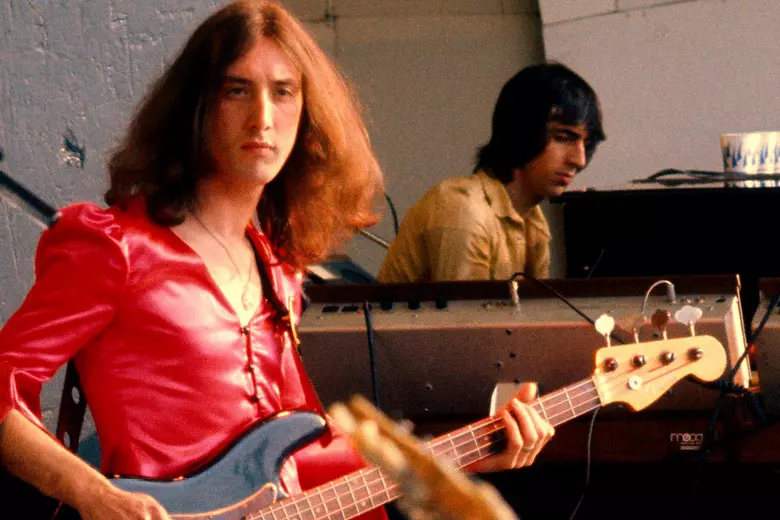
From the buzzing clubrooms of Chicago’s West Side to the barber chair where riffs spilled between haircuts, the Eddie Newell blues bio offers a rich glimpse of a working musician whose story intersects community, culture and sound. In what follows we’ll trace Eddie Newell’s background, musical path, recordings, community impact and legacy.
Early Roots and Migration: Foundations of the Eddie Newell Blues Bio
The Eddie Newell blues bio begins not in a major metropolitan spotlight but rather in the modest spaces of Chicago’s West Side, where local venues, barber shops and street corners provided a musical incubator. Though detailed public records of his childhood are limited, one key note emerges: his barber shop on Kedzie Avenue (in the North Lawndale area) served as a gathering place for blues musicians and young aspirants who watched Newell “blow his harp between haircuts.” dnainfo.com
This fusion of everyday life (cutting hair) and music (harp in hand) is central to his story. Rather than leaving one world behind, Eddie Newell occupied both worlds at once — the service business and the blues business. That interplay gives his blues bio texture: the musician-barber, the club player, the community fixture.
Establishing in the Chicago Blues Scene
In the broader scope of the Eddie Newell blues bio, his arrival into Chicago’s blues ecosystem marks a turning point. The West Side of Chicago in the 1960s and 70s was a hotbed of club culture, migration-influenced blues, and harp-led ensembles. In that realm, Newell developed his style and presence.
According to accounts from the time, his barber shop doubled as a musical cross-roads where younger musicians and established players rubbed elbows. dnainfo.com That regular exposure to both craft and community allowed him to build a network, refine his harp playing, and engage in local performances.
Though he did not achieve national fame on a grand scale, by virtue of his place in that ecosystem the Eddie Newell blues bio captures a vital aspect of the Chicago harp tradition — the working musician who sustains the scene rather than headlines it.
Musical Style, Sound and Influences
A meaningful part of the Eddie Newell blues bio is his musical style: harp-focused, club-oriented, rooted in the post-war Chicago electric blues tradition. While specific detailed recordings are scarce, the surrounding narratives position Newell among musicians who valued the harmonica (or “harp”) as a frontline instrument and the club as their proving ground.
What stands out:
Harp as centerpiece: The mention of Newell “blowing his harp between haircuts” implies his instrument was central, not incidental. dnainfo.com
Club-driven style: His presence in local venues suggests his playing was geared toward live audience energy rather than studio polish.
Community-grounded influences: Growing up in or working through Chicago’s West Side means Newell’s sound likely absorbed both Southern-migrated blues traditions and the urban amplification that defined Chicago blues.
In sum, the style laid out in his bio aligns with the working-harp tradition: raw, direct, socially connected.
Recordings and Legacy of Output
When writing a full Eddie Newell blues bio, one must address the recording footprint — even if modest — because it anchors the artist in tangible output. While Newell is not widely documented in major label archives or large discographies, his involvement in the local scene gives his recorded legacy value for historians.
Notably, sources indicate that his barber shop attracted not just hair cuts but performances and spaced-out jams among blues musicians. dnainfo.com While specific singles or albums with Newell’s name may not be widely listed, his presence in that scene validates his role.
For fans and researchers, his recordings (even if few) may represent hidden gems: harp-led tracks by a guy who split time between barber shears and club chords. The Eddie Newell blues bio thus becomes meaningful not just for what is widely known, but for its gaps — the lesser-documented corners of blues history.
Community Role: Beyond the Stage
Perhaps the richest dimension of the Eddie Newell blues bio lies in his community role. His North Lawndale barber shop on Kedzie became a hub. According to neighborhood reports, it was frequented by musicians and young apprentices, and Newell’s dual role as barber + musician made him a connector. dnainfo.com
Here are several ways his community role adds to his bio:
Mentor-presence: Younger musicians would gather in his shop, hear harp solos between clients, and absorb informal wisdom.
Urban cultural node: The West Side of Chicago had many clubs and spaces, but a barber shop doubles as safe, everyday space — giving blues a continuing life outside big venues.
Living bridge: Newell’s existence straddled service economy and music economy, making his story resonate for those seeking how blues persisted in working-class neighborhoods.
Hence the Eddie Newell blues bio becomes not just about notes and stage lights, but haircuts, conversations, community and continuity.
Challenges, Visibility & Historical Recognition
No blues bio is complete without acknowledging the obstacles. In the case of Eddie Newell, his story reflects several of the systemic challenges faced by many working blues musicians:
Limited documentation: Because Newell did not become a household name, public records, discographies and major label entries are minimal.
Shifting music economy: By the 1970s and beyond, club closures, changing popular tastes and economic pressures impacted blues clubs on the West Side of Chicago. Though not specific to Newell alone, these phenomena affect many in his generation. illinoisblues.com+1
Underground status: Musicians like Newell may have been beloved locally but did not get wider marketing, festival tours or big-label platforms.
Understanding these factors helps frame the Eddie Newell blues bio not as a story of missing success but as a story of real, sustained musical life in the shadows of the spotlight.
Why the Eddie Newell Blues Bio Matters Today
As we reflect on the Eddie Newell blues bio, several reasons emerge for why his biography still holds relevance:
Preserving the grassroots: Biographies like Newell’s capture the grassroots of blues — the barber shops, the local clubs, the unpaid jams — that often go undocumented.
Completing the mosaic: The mainstream blues history often focuses on big stars; including artists like Newell completes the picture of the scene.
Community inspiration: His dual life as barber and musician gives a template of how art and work often coexist in real life.
Educational value: For students of blues, studying Newell’s path offers insight into migration, local networks and the continuity of the harp tradition in Chicago.
Therefore, the Eddie Newell blues bio isn’t merely curiosity — it’s cultural heritage.
A Snapshot Timeline of Eddie Newell
Here is a distilled timeline to place key bearings in the Eddie Newell blues bio:
Mid-20th century: Moves or lives in Chicago’s West Side (North Lawndale, Kedzie Avenue).
1960s-70s: Barber shop becomes local blues social hub; Newell plays harp, hosts musicians, lives between haircuts and sets.
Later years: Though not widely recorded or studied, his presence remains part of local blues lore; his community role endures in stories of the West Side scene.
Present significance: Researchers and blues historians reference his shop and role as way to understand the environment of Chicago blues beyond major stars. dnainfo.com
Musical Highlights & Listening Suggestions
While full albums may not be broadly available, for anyone tracing the Eddie Newell blues bio, here are suggested ways to engage:
Visit archives or local libraries in Chicago’s West Side to uncover club listings from the 1960s-70s where Newell may have performed.
Research the barber shop on Kedzie Avenue as a social space — some historical neighborhood articles reference Newell and his role. dnainfo.com
Explore compilations of Chicago harp-led blues from the era and consider where lesser-known artists like Newell fit in context.
In listening, focus on harp-first arrangements, tight rhythm sections typical of West Side blues, and songs that reflect club-rather-than-studio atmospheres.
Conclusion: The Full Circle of the Eddie Newell Blues Bio
The Eddie Newell blues bio stands out for its multi-dimensional character: musician and barber, club player and community anchor. While not a headline figure, Eddie Newell’s story reminds us that the blues lives in everyday spaces — in the barber’s chair, the club’s back room, the jam that starts after hours.
His life underscores that musical history is not just about the greats who sold albums but about thousands of practitioners who kept the flame alive night after night, in local neighborhoods, amid real life and work. The barber-harp-player image may not sell stadiums, but it signifies authenticity and cultural persistence.
For those interested in blues heritage, the Eddie Newell blues bio invites deeper exploration: into the West Side of Chicago, into barber-shop sessions, into the harp’s journey from Southern fields to Northern clubs. His story doesn’t end with fame; it thrives in continuity, community and a small-but-vital local legacy.
If you like, I can dig up archival photographs, club flyers, and barber-shop memorabilia tied to Eddie Newell’s scene, to flesh out his biography with visuals and context. Would that be helpful?